In short
In 1965 two radio astronomers traced a persistent hiss in their antenna to the afterglow of the early universe. Satellites from COBE to Planck turned that signal into a detailed record of cosmic history, and it remains a rich source of ideas for science fiction.
- Found by accident at Bell Labs in 1964 and 1965
- COBE, WMAP and Planck turned noise into precision cosmology
- The CMB is a snapshot of the universe at 380,000 years
A prediction almost forgotten
In 1948 Ralph Alpher and Robert Herman, working on George Gamow's ideas about a hot early universe, predicted that the Big Bang should have left behind a faint radiation filling all of space, cooled by cosmic expansion to a few degrees above absolute zero. Their estimate was about 5 kelvin. The prediction drew little attention, and for more than a decade nobody set out to search for it systematically.
The noise in the horn antenna
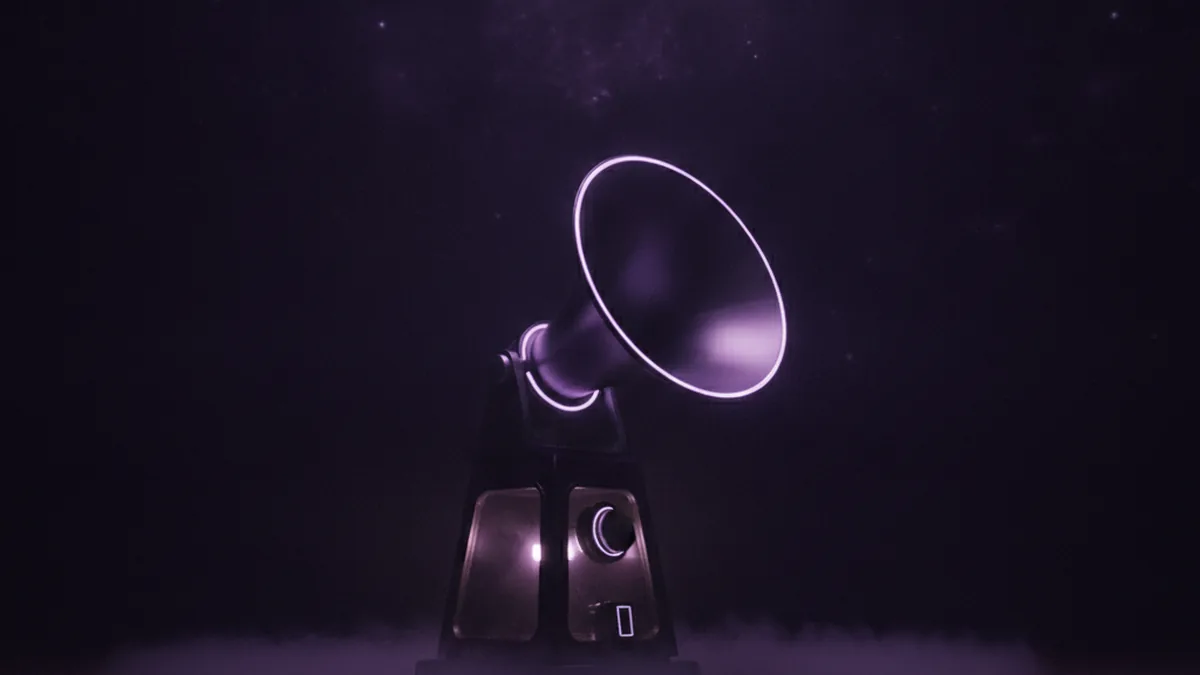
In 1964 Arno Penzias and Robert Wilson, radio astronomers at Bell Telephone Laboratories in Holmdel, New Jersey, were preparing a large horn antenna for precise radio measurements. They found an excess of microwave noise at a wavelength of 7.35 centimetres, equivalent to a temperature of about 3.5 kelvin. It came from every direction, did not change with the time of day or the season and did not follow any known source.
They checked their equipment thoroughly, famously including the removal of pigeon droppings from inside the antenna, which they described in their paper as white dielectric material. The noise stayed. At the same time, a group at nearby Princeton University led by Robert Dicke, with Jim Peebles, Peter Roll and David Wilkinson, had worked out the theory independently and was building an instrument to search for this radiation. When the two groups made contact, the meaning of the signal became clear.
Both teams published companion papers in The Astrophysical Journal in 1965: Penzias and Wilson reporting the measurement, the Princeton group explaining it as the relic radiation of a hot Big Bang. Penzias and Wilson received the Nobel Prize in Physics in 1978. The discovery was the strongest evidence yet that the universe had a hot, dense beginning, and it largely ended the steady-state model as a serious rival.
The episode is often told as a story of luck, but it is better read as a story of care. Many engineers would have accepted a few kelvin of unexplained noise as a quirk of the hardware. Penzias and Wilson kept looking for an ordinary cause until none remained, and the Princeton group had already done the theoretical work needed to recognise what was left.
From noise to precision cosmology
Measuring the background precisely from the ground is hard, because the atmosphere absorbs and emits at the same wavelengths. Three space missions transformed the field.
| Mission | Agency and years | Key result |
|---|---|---|
| COBE | NASA, launched 1989 | Showed the spectrum is an almost perfect blackbody at about 2.725 K and detected tiny temperature variations of about 1 part in 100,000 (announced 1992) |
| WMAP | NASA, 2001 to 2010 | Full-sky maps that pinned down the age, geometry and composition of the universe |
| Planck | ESA, 2009 to 2013 | The most detailed maps of the background, giving an age of about 13.8 billion years |
The COBE results earned John Mather and George Smoot the 2006 Nobel Prize in Physics. The shape of the spectrum confirmed the hot Big Bang, and the faint ripples showed where the structure of today's universe began.
Ground-based and balloon-borne experiments contributed as well, especially in measuring finer details of the ripples and the polarisation of the background light. Today the focus has shifted to that polarisation, which carries information about how light scattered in the early universe and, possibly, about the first fraction of a second after the Big Bang. Projects continue to search for these subtle patterns, and the results so far set limits rather than confirming any single theory.
What the CMB tells us
- When it was released: for roughly the first 380,000 years the universe was a hot plasma that light could not cross. As it cooled to about 3,000 kelvin, electrons and nuclei combined into atoms and light travelled freely. The CMB is that light.
- How much it has stretched: since then the universe has expanded by a factor of about 1,100, cooling the radiation from about 3,000 K to about 2.7 K and shifting it into microwaves.
- What the universe is made of: Planck data indicate roughly 5 percent ordinary matter, about 27 percent dark matter and about 68 percent dark energy.
- Its geometry: the size of the ripples shows that space on large scales is very close to flat.
- The seeds of galaxies: the tiny temperature differences mark slightly denser regions that gravity later grew into galaxies and clusters.
- Our own motion: one side of the sky looks slightly warmer than the other because the Solar System moves at about 370 kilometres per second relative to the background.
Common misunderstandings
The CMB is not light from the Big Bang itself; it was released hundreds of thousands of years later. It is not a picture of an explosion at a single point, since it comes from all directions because the early universe was hot everywhere. And it is not purely a laboratory abstraction: on an old analogue television tuned between channels, a small fraction of the static came from the cosmic microwave background.
Another frequent mistake is to imagine the CMB as a wall at the edge of space. It is better understood as a surface in time: the most distant light we can see because, before it was released, the universe was opaque. Observers anywhere else in the universe would see their own version of the same background, coming from a different shell of matter but with the same temperature and statistical pattern.
Ideas for science fiction writers
The CMB is a gift to science fiction because it is universal, measurable and tied to time. Some directions worth exploring:
- A universal clock. Any civilisation in the observable universe can measure the background's temperature, so it could serve as a shared calendar for species with no common history.
- A universal compass. The dipole caused by our motion defines a natural rest frame. Navigators between stars could use it the way sailors used the pole star.
- A warmer past. Physicist Abraham Loeb has pointed out that when the universe was 10 to 17 million years old, the background was warm enough for liquid water on any rocky world. A story set in that era, or about the traces of such life, starts from real physics.
- A darker future. As expansion continues, the background will cool and fade. Astronomers in the very far future may find it hard or impossible to detect, losing the evidence their ancestors relied on, a strong premise for a story about forgotten knowledge.
- Discovery as plot. The Penzias and Wilson story is a model narrative: a nuisance that will not go away, careful elimination of every ordinary cause, and the realisation that the noise is the message.
Some of the biggest discoveries begin as an annoyance that careful people refuse to explain away.
Questions
Who discovered the cosmic microwave background?
Arno Penzias and Robert Wilson of Bell Labs detected it in 1964 and 1965, and a Princeton group led by Robert Dicke explained it. Penzias and Wilson shared the 1978 Nobel Prize in Physics.
How old is the CMB?
It was released about 380,000 years after the Big Bang. Its light has been travelling for most of the universe's age of about 13.8 billion years.
What temperature is the CMB today?
About 2.725 kelvin, measured precisely by the COBE satellite's FIRAS instrument.

Independent reader guides, science notes and writing craft.